
The TCL A65K launched at CES 2026 and hit shelves in mid-2026 at around $399–$700 depending on the retailer (see price on Amazon). A true 3.1.2-channel system with a dedicated wireless subwoofer, it features hardware-based audio tuning from Bang & Olufsen, nine built-in speakers, Dolby Atmos, DTS:X, and a profile so slim it measures just 1.97″ deep — flat enough to sit completely flush beneath an ultra-thin modern television.
The Bang & Olufsen collaboration is the same arrangement TCL uses on its flagship X11L television — here brought down to a soundbar that regular people might actually buy.
So: does the B&O badge mean anything at this price tier, or is it mostly a marketing play? Here’s what people who have actually used it are saying.
This article contains Amazon affiliate links. If you purchase through them, we may earn a small commission at no extra cost to you.
Our write-up is based on publicly available user feedback from Amazon, audio community forums, and independent reviewer impressions. We don’t personally test the products we cover — you can read more about our approach on our About page.
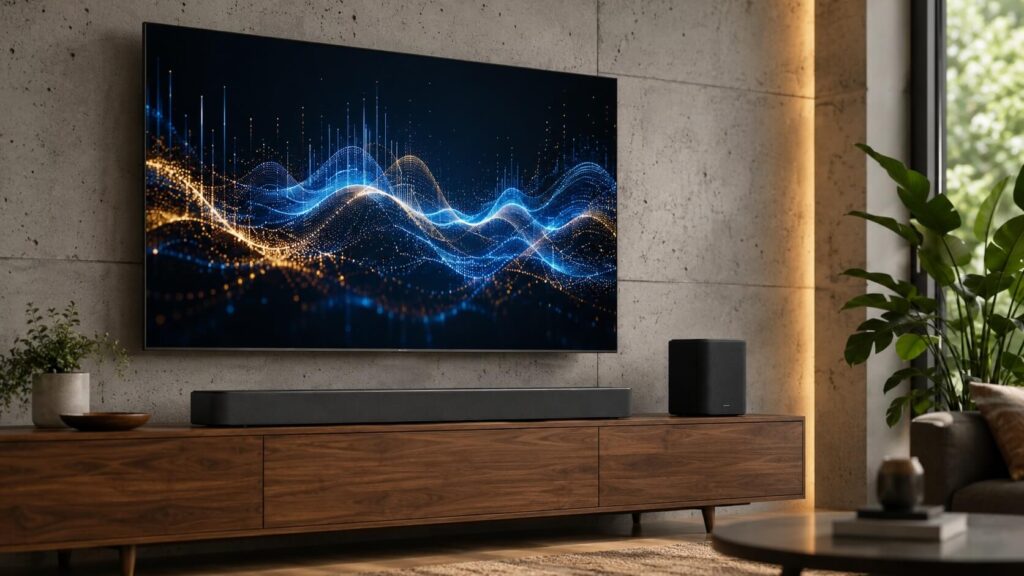
Table of Contents
- What the TCL A65K Actually Is
- What’s in the Box
- What Users Are Saying
- Who This Soundbar Makes Sense For
- Frequently Asked Questions
What the TCL A65K Actually Is
Before getting into opinions, it helps to know what you’re dealing with.
The A65K is a 3.1.2-channel system: three front channels (left, center, right), one wireless subwoofer, and two up-firing drivers built into the bar itself.
That last part matters — the up-firing drivers are physical, not virtual. A lot of soundbars at this price claim Dolby Atmos support by processing the audio digitally to simulate overhead sound, which is noticeably different from having actual drivers pointed at the ceiling.
Here’s a quick look at the specs:
| Feature | Detail |
|---|---|
| Configuration | 3.1.2 channels |
| Total Drivers | 9 |
| Peak Power | 460W |
| Subwoofer Driver | 6.5-inch, wireless |
| Soundbar Depth | 50mm (~2 inches) |
| Soundbar Width | 880mm (~34.6 inches) |
| Audio Formats | Dolby Atmos, DTS:X |
| Connectivity | HDMI eARC (2.1), Bluetooth 5.3, USB |
| Sound Modes | 8 (Movie, Music, Sport, News, Game, Night, Standard, Custom) |
| Room Calibration | AI Sonic-Adaptation via TCL Home App |
| Apple AirPlay 2 | No |
| Price at Launch | ~$399–$700 (varies by retailer) |
The Bang & Olufsen involvement includes their Beosonic tuning system, accessible through the TCL Home app. It gives you channel-level control and a soundstage dial with four orientations — Bright, Energetic, Warm, and Relaxed — more granular than what you’d usually get at this price point.
What’s in the Box
You get the soundbar with power adapter and cable, the wireless subwoofer with its own power cord, an HDMI cable, a remote with batteries pre-included, wall-mount brackets with a mounting template, and a quick-start guide. The sub arrives already paired to the bar from the factory.
What Users Are Saying
The First Impression: It Looks Too Slim to Work
Almost every reviewer brought this up. The bar looks impossibly thin when you take it out of the box, and the lightness only adds to the skepticism. Users from both Best Buy and Amazon described the same moment — holding it for the first time, questioning whether something this light could actually produce decent sound, and then being surprised once they powered it on.
One reviewer who had spent years running a 13.2 dedicated home theater said he expected it to sound passable for its size, and was caught off guard by how large and room-filling the result actually was. That reaction — skepticism followed by a pleasant surprise — is the most common pattern in the reviews.
Design: The Consensus Is Strong
Design is where users agree most. The charcoal black fabric finish, rounded edges, and slim profile consistently land well. Several buyers described it as one of the better-looking soundbars they’ve owned, and a few noted it looks more like a design object than a piece of consumer audio kit. The cloth grille wrapping the front and sides gets specific praise for giving it a more refined, less plasticky appearance than most soundbars at this price.
The subwoofer draws slightly less enthusiasm on looks, though its flat, compact footprint is appreciated. Users with small rooms or bedrooms found it easy to tuck behind a nightstand, beside a couch, or out of sight entirely. A reviewer with an 85″ TV found the included HDMI cable too short to reach the eARC port and had to swap in a longer one — worth noting if you’re working with a large screen.
One consistent gripe: the segmented LED display on the front of the bar. A few users felt it looked out of place on an otherwise clean design, and because it can only show five characters at a time, most mode names have to scroll. That said, other users appreciated having any display at all — it gives visual confirmation of what the remote is doing without requiring the app.
Setup: Quick, With One Thing to Check First
Setup is the most unanimously positive topic across all the reviews we found. The subwoofer pairs automatically at power-on, HDMI eARC handles TV volume control, and most users had everything running in under ten minutes. Several described it as true plug-and-play, with one noting they didn’t even have to program their existing TV remote — it worked with the soundbar immediately out of the box.
The one thing to verify before buying: the A65K uses its single HDMI port as an audio output to your TV, not as a passthrough for other devices. If your TV’s HDMI ports are already fully occupied, you’ll need to free one up or add an HDMI switcher. A handful of reviewers flagged this as an unexpected inconvenience — one had to disconnect a Blu-ray player to make it work.
One reviewer using an older five-year-old TV couldn’t get satisfying sound regardless of settings and planned to re-test when their new TCL TV arrived. It’s a reasonable reminder that older TVs with limited audio output options may not get the best out of this system.
Sound Quality: Good, With an Honest Asterisk on Atmos
The overall verdict on sound is positive, but reviewers are more measured here than on design.
Bass consistently gets the highest marks. The wireless sub hits harder than its size suggests, and a number of users had to dial it back after setup — not a bad problem to have.
The low-end is described as punchy and room-filling, tuned toward a cinematic rather than neutral presentation. Users with a preference for flat, accurate sound may want to spend time with the EQ settings, but those after an impactful movie experience tend to be happy with the defaults. One reviewer compared the bass tuning to a movie theater — more presence than strictly necessary, but enjoyable for the right content.
Dialogue clarity is another consistent strength. The dedicated center channel does its job, keeping voices anchored and clear even during loud action sequences.
Reviewers who tested with Atmos-encoded films — Dune: Part Two’s sandworm scenes came up twice, as did Top Gun: Maverick’s carrier deck sequences — found the A65K handled them well. Voice mode and manual center channel boosting (several users settled around +3 to +6) helped further.
The B&O tuning is described as balanced and natural rather than boosted or harsh. Users who went in skeptical about whether the branding meant anything came away generally acknowledging the difference — particularly in how composed the system stays at higher volumes and how well the midrange is controlled.
Where things get more nuanced is the Atmos and surround effect. This comes up in almost every detailed review, and the honest summary is: it’s a meaningful step up from TV speakers, but it’s still primarily a front-facing system. The soundstage is wider than a standard bar, and there’s a convincing sense of height on compatible content, but sounds don’t wrap around the room or drop noticeably from above. Users coming from multi-speaker surround setups should factor this in. The up-firing drivers work better in rooms with standard 8–9 foot ceilings — one reviewer in a large open living room found the effect less convincing.
One reviewer was more critical, noting a frequency response gap between the tweeters and the subwoofer that left dialogue and music sounding thin in his room. He landed on the conclusion that it’s a solid secondary-room soundbar, but not something he’d recommend as a primary home theater setup.
Room size comes up repeatedly here — users with smaller bedrooms and guest rooms are consistently happier than those in larger living rooms.
The TCL Home App: Useful, But Inconsistent
The app gets split reviews. AI Sonic room calibration — where you hold your phone at chest height while the system plays test tones for a couple of minutes — was found helpful by a good number of users, with dialogue clarity and overall balance improving noticeably after running it. Others found the difference marginal or hard to perceive.
More pointed criticism focuses on the app itself: it requires account registration to access extra features, crashed on some iPhones during Bluetooth setup for the calibration tool, and one user flagged that it displays a “connection broken” message during normal operation that implies something is wrong when nothing is. Several reviewers concluded that the remote covers most daily needs and the app is worth skipping unless you specifically want the room calibration.
On a positive note, one reviewer discovered a useful fix for a common issue: if you get audio dropouts whenever a YouTube ad plays, the cause is a digital format handshake conflict. Turning off 5.1 audio in the YouTube app settings, or setting your TV’s audio output to PCM, resolves it entirely.
Beosonic, the B&O soundstage adjustment tool within the app, gets mild coverage. A few users found the Energetic preset useful for voice clarity, but most found the differences between modes subtle enough that they didn’t return to it after initial setup.
The AirPlay and Optical Situation
This is worth addressing directly because several retailer listings — including Best Buy at launch — incorrectly listed AirPlay 2, optical input, AUX input, and HDMI passthrough as features of the A65K. None of these are present. TCL acknowledged the listing errors in responses to affected buyers.
The actual connectivity is HDMI eARC, Bluetooth 5.3, and USB-A for audio files. If your TV lacks an eARC port, there is no wired fallback.
For Apple ecosystem users who want to stream from an iPhone or integrate this into a multi-room audio setup, the Bluetooth-only wireless option is a real limitation.
Who This Soundbar Makes Sense For
Based on feedback across user reviews from Best Buy and Amazon:
Good fit for:
- Smaller rooms and bedrooms — this is where the vast majority of happy reviewers are using it
- Anyone prioritising design and a clean look alongside decent audio performance
- TCL TV owners who want tight ecosystem integration
- People upgrading from TV speakers who want clearer dialogue and real bass without a bulky system
- Set-and-forget buyers who don’t want to spend hours dialling in settings
Worth thinking twice if:
- You have a large living room and want genuine room-filling surround
- You’re in the Apple ecosystem and need AirPlay for multi-room audio
- Your TV is older and lacks HDMI eARC — there’s no optical fallback
- You’re coming from a real multi-speaker surround setup and expect comparable immersion
- All your TV’s HDMI ports are already occupied
Frequently Asked Questions
Does the TCL A65K work with non-TCL TVs?
Yes. It connects via HDMI eARC, which is standard on most modern TVs. Reviewers have used it successfully with Hisense, Vizio, Samsung, and other brands. Some app features — including Beosonic — may be restricted when connected to a non-TCL TV via standard ARC rather than eARC.
Is the Bang & Olufsen tuning real or just branding?
Based on user impressions, the tuning does have a real effect — particularly in midrange balance and how the system handles higher volumes without harshness. Several buyers who went in skeptical about the branding came away acknowledging a difference. It’s not a standalone B&O speaker, but it’s not purely a sticker either.
Does the A65K have AirPlay 2?
No. Despite some retailer listings suggesting otherwise, the A65K does not support AirPlay 2. TCL has acknowledged this was a listing error. Wireless streaming is Bluetooth 5.3 only.
Does it have an optical input?
No. The only wired connection is HDMI eARC. There is no optical input, no AUX, and no HDMI passthrough. This was also incorrectly listed by some retailers at launch.
Can I use the soundbar without the subwoofer?
Technically, but the low-end drops off sharply without it. The system is designed and tuned as a unit, and the bar alone sounds noticeably thin. Most users will always run both together.
Does the Dolby Atmos actually work?
The A65K has physical up-firing drivers, so it’s genuine Atmos hardware rather than virtual processing. That said, reviewers consistently describe the overhead effect as subtle — it widens the front soundstage and adds a sense of height, but doesn’t replicate the experience of physical ceiling speakers. Room ceiling height and layout make a difference.
What’s the AI Sonic Adaptation feature?
It’s TCL’s room calibration tool, accessible through the TCL Home App. You hold your phone at chest height and it plays test tones for a couple of minutes, then adjusts output for your room’s acoustics. Results vary — some users notice a meaningful improvement in dialogue clarity, others find the difference minimal.
What’s in the box?
Soundbar with power adapter, wireless subwoofer with power cord, HDMI cable, remote with batteries, wall-mount brackets with mounting template, and a quick-start guide.